
Call Us

(905) 670-0113

2026 Best Types of Compression Moulding Parts

Choosing the right Compression Moulding Parts in 2026 requires more than comparing shapes, prices, or catalog photographs. Each part must suit its material, load, temperature, and production environment. A thick electrical insulator behaves differently from a thin automotive seal. Small design choices matter.

Dr. James L. Throne, a respected plastics-processing specialist, has emphasized this practical principle: “The mold is part of the process, not merely a container for the material.” That idea remains highly relevant. Compression pressure, cure time, mold temperature, fiber direction, and release behavior can influence dimensional accuracy. They also affect surface finish and service life. A polished cavity may produce a clean face, but poor venting can still leave trapped air near sharp corners.

This guide examines the 2026 best types of Compression Moulding Parts for industrial, automotive, electrical, medical, and composite applications. It considers thermoset components, rubber parts, fiber-reinforced structures, and specialty molded products. The discussion focuses on practical selection, not marketing claims. Material compatibility comes first. Repeatability matters too.

There is no universal “best” part.

A component that performs well in a high-volume factory may fail in a low-temperature installation. Engineers should review tolerances, testing records, maintenance needs, and supplier consistency before approving a design. Some recommendations may require adjustment after real production trials. That is normal. Even experienced teams can underestimate shrinkage, flash, or uneven pressure distribution. Careful evaluation turns those imperfections into useful design information.
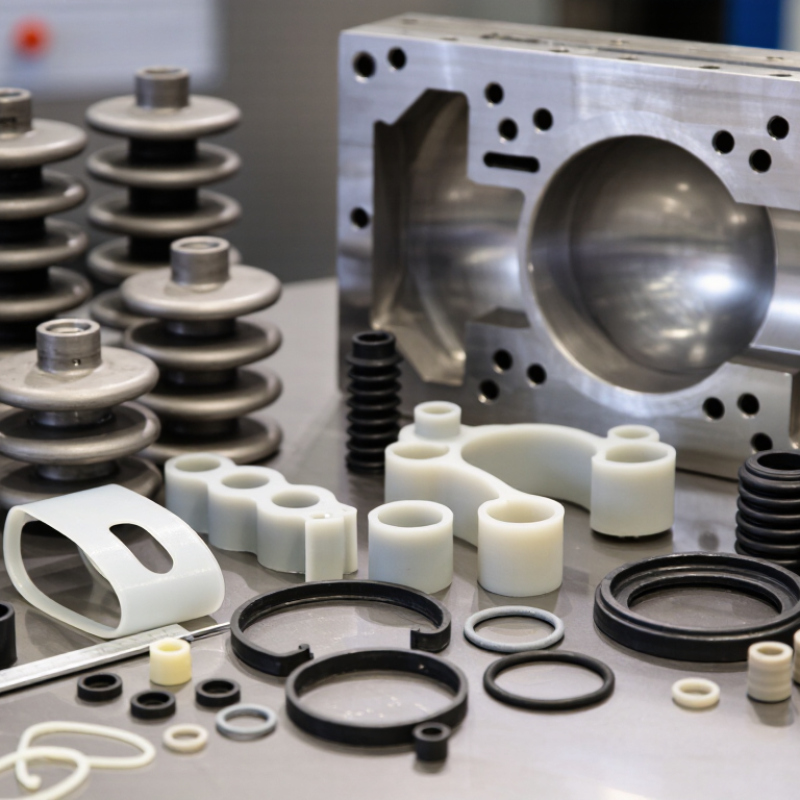
2026 Best Types of Compression Moulding Parts

What Are Compression Moulding Parts?

Compression moulding parts are components formed by pressing a measured material charge inside a heated mould. The charge may be rubber, thermoset plastic, or fibre-reinforced composite. Heat softens or cures it. Pressure then creates the required shape.

Common examples include gaskets, seals, electrical insulators, vehicle panels, handles, and protective housings. A finished part often shows smooth edges, stable dimensions, and visible moulding lines. These details matter. A poorly placed charge can create thin areas, voids, or uneven fibre distribution. The process is not flawless.

PlasticsEurope’s Plastics—The Fast Facts 2023 reports 400.3 million tonnes of plastics were produced worldwide in 2022. That scale increases demand for repeatable moulded components, especially in transport, electrical, and industrial equipment. The U.S. Department of Energy also identifies lightweight composite materials as a route to reducing vehicle mass and energy use. Compression moulding supports this aim by shaping strong parts with relatively low material waste.

Material selection still requires testing. Rubber parts may need tensile and compression-set testing under ASTM methods. Plastic components require checks for impact strength, heat resistance, and dimensional stability. ISO 20457 also provides guidance for tolerances in moulded plastic parts. Designers sometimes focus too heavily on appearance. Service temperature, moisture, pressure, and ageing can matter more. A small sealing part may fail quietly, then damage an entire assembly.

How Compression Moulding Parts Are Classified

2026 Best Types of Compression Moulding Parts

Compression moulding parts are best classified by material, geometry, and end use. Material classification usually separates thermosets, elastomers, and thermoplastic composites. Thermoset parts include phenolic, epoxy, and silicone components. Elastomeric parts include seals, gaskets, and vibration pads. Thermoplastic composite parts use heated sheets or charge materials. They can be reshaped during processing.

Geometry provides another practical classification. Flat panels need controlled pressure and even heating. Deep housings require careful material flow. Ribbed covers need accurate charge placement. Thin sealing rings demand stable mould temperatures. The classification affects flash control, cycle time, and dimensional inspection. It is not only a design label.

Market data supports this wider view. The Plastics—The Fast Facts 2024 report recorded global plastics production at about 414 million tonnes in 2023. However, that figure covers many processes, not compression moulding alone. Industry forecasts also estimate steady growth for compression moulding through 2029, driven by lightweight transport and electrical applications. Forecasts differ.

That matters. Report boundaries are inconsistent. Some include composite compression parts, while others count only moulding equipment or materials. Engineers should therefore classify each part using three fields: material family, shape complexity, and functional purpose. A part may fit several categories. That is normal, but it can weaken purchasing comparisons without shared definitions.

Which Materials Are Used in Compression Moulding Parts?

2026 Best Types of Compression Moulding Parts

Which Materials Are Used in Compression Moulding Parts?

Compression moulding parts commonly use thermoset compounds, rubber, and engineering composites. Sheet moulding compound and bulk moulding compound combine resin, fillers, and reinforcing fibres. They suit electrical housings, vehicle panels, and structural brackets. Phenolic compounds resist heat and flame. Epoxy compounds deliver strong adhesion and dimensional stability. Silicone rubber remains useful for seals exposed to heat and moisture. Material choice depends on pressure, temperature, impact, and surface requirements.

Grand View Research estimated the global compression moulding market at about USD 6.5 billion in 2023. Its report forecasts approximately 5.2% annual growth from 2024 to 2030. This growth reflects demand for lighter parts and stable production cycles. MarketsandMarkets also identifies thermoset composites as important for transport and electrical applications. Yet published forecasts differ. They use different product boundaries and regional data. That limitation deserves attention.

Tips: Start with the service environment, not the cheapest compound. Check operating temperature, moisture, chemical contact, and required stiffness. Ask for fibre content, shrinkage data, and batch traceability. A small pilot run can reveal warpage or incomplete filling. It is not glamorous, but it prevents expensive tooling changes. Recycled fillers may reduce material impact, but they can change flow and strength. Test them before approving production.

2026 Best Types of Compression Moulding Parts

Which materials are used in compression moulding parts?

Compression moulding commonly uses thermoset compounds and elastomers for electrical housings, automotive components, seals, gaskets, cookware handles, structural panels, and industrial parts. The chart shows representative moulding temperatures for widely used material groups. Actual values vary according to grade, part thickness, pressure, and curing system.

How Compression Moulding Parts Are Manufactured

2026 Best Types of Compression Moulding Parts

How Compression Moulding Parts Are Manufactured

Compression moulding begins with a measured charge of thermoset compound, rubber, or composite material. Operators place it inside a heated mould cavity. The upper mould then closes and applies controlled pressure. Heat softens the charge, while pressure drives it into ribs, bosses, and thin edges. The material cures inside the cavity before ejection.

Typical parts include electrical housings, automotive covers, sealing rings, handles, and structural panels. Sheet moulding compound suits larger reinforced panels. Bulk moulding compound works well for compact, detailed components. Rubber compounds need accurate temperature control because under-curing leaves weak areas. Over-curing can create brittle edges.

Small details matter.

A 2024 MarketsandMarkets assessment estimated the compression moulding compounds market at about 5.9 billion US dollars in 2023. It also projected growth toward roughly 8.2 billion dollars by 2028. These figures reflect wider demand for lightweight and electrically insulating parts. However, market forecasts are not production guarantees. Actual results depend on tool design, material moisture, charge placement, and cycle discipline.

During manufacturing, technicians inspect the charge weight, mould temperature, closing speed, cure time, and flash thickness. A practical temperature range may fall near 140–180°C, but each compound requires its own validated schedule. After demoulding, trimming removes excess flash. Dimensional checks, visual inspection, and hardness or strength tests reveal defects. A single surface reading can mislead. Internal curing may still be incomplete, which is why process records and sampled testing remain essential.

What Are the Main Applications of Compression Moulding Parts?

Compression moulding parts serve demanding applications where heat, pressure, and repeatability matter. Manufacturers place measured material charges into heated moulds, then apply controlled pressure. This method produces covers, brackets, housings, seals, and structural panels with stable dimensions. Thermoset compounds, rubber, and fibre-reinforced materials are common choices.

Automotive systems use these parts under the bonnet, inside electrical modules, and around battery compartments. They can resist vibration, chemicals, and elevated temperatures when the material is correctly specified. Electrical equipment also uses compression-moulded insulators, switch components, and protective enclosures. Their low electrical conductivity helps separate live components from surrounding structures. The fit matters.

In construction and industrial equipment, moulded parts appear as pipe seals, pump components, handles, and corrosion-resistant panels. Fibre-reinforced mouldings can provide stiffness without excessive weight, supporting transport and energy equipment applications. Medical and laboratory products may use compression moulding for rigid trays or chemically resistant components, but material traceability and validation remain essential. The process is not flawless. Uneven charge placement can create voids, warping, or weak edges. I would not judge quality from appearance alone. Engineers should verify cure time, pressure records, dimensional tolerances, and finished-part performance. Small changes in moisture, temperature, or mould wear can affect long production runs. That practical risk is often underestimated.

2026 Best Types of Compression Moulding Parts – What Are the Main Applications of Compression Moulding Parts?

Compression Moulding Part Type Common Material Families Key Functional Properties Main Applications Typical End-Use Industries Why Compression Moulding Is Suitable
Electrical Insulators and Covers Thermoset compounds such as epoxy, phenolic, melamine and unsaturated polyester moulding compounds Electrical insulation, dimensional stability, flame resistance and resistance to heat and chemicals Switchgear barriers, terminal covers, fuse bodies, connector housings and insulating supports Power distribution, electrical equipment and industrial control systems Thermoset materials cure into rigid, heat-resistant parts with reliable insulating performance
Automotive Exterior Panels Glass-fibre-reinforced sheet moulding compound (SMC), carbon-fibre compounds and other thermoset composites Low density, corrosion resistance, good surface finish and useful stiffness-to-weight ratio Hood panels, roof modules, trunk lids, body panels and underbody shields Passenger vehicles, commercial vehicles and specialty vehicles Large composite panels can be formed with integrated ribs, mounting points and multiple contours in one operation
Automotive Structural and Under-Hood Parts Glass-fibre-reinforced thermoset compounds, long-fibre thermoplastics and high-temperature engineering compounds Structural stiffness, vibration damping, heat resistance and resistance to automotive fluids Battery trays, air-intake components, engine covers, brackets, fan shrouds and cross-car structures Automotive powertrain, chassis and electric-vehicle systems Fibre reinforcement improves mechanical performance while compression moulding supports repeatable, complex geometries
Rubber Seals and Gaskets Silicone rubber, EPDM, nitrile rubber, fluorocarbon rubber and natural rubber compounds Elastic recovery, sealing capability, resistance to temperature, weathering, oils or chemicals depending on the compound O-rings, flange gaskets, valve seals, pipe seals, cable seals and custom sealing profiles Fluid handling, automotive, medical equipment, HVAC and industrial machinery The process applies controlled heat and pressure to cure elastomers into durable, flexible sealing parts
Rubber Vibration and Impact Components Natural rubber, synthetic rubber, silicone rubber and polyurethane elastomer compounds Vibration isolation, shock absorption, resilience, noise reduction and fatigue resistance Engine mounts, bushings, anti-vibration pads, bump stops and suspension components Automotive, rail transport, industrial machinery and construction equipment Compression moulding is effective for producing thick elastomeric parts with controlled hardness and damping characteristics
Composite Sporting Goods Carbon-fibre, glass-fibre or aramid-fibre reinforced epoxy and other thermoset resin systems High specific strength, stiffness, fatigue resistance and design flexibility Bicycle components, protective equipment, racket frames, board components and sporting braces Cycling, outdoor recreation, fitness and professional sports equipment Fibre orientation and laminate construction can be tailored to achieve lightweight, directional performance
Aerospace Interior and Composite Parts Carbon-fibre or glass-fibre reinforced epoxy, phenolic and high-temperature thermoset composites Low weight, stiffness, fire-smoke performance potential and resistance to temperature and chemicals Interior panels, seat components, trays, brackets, access panels and aerodynamic fairing parts Aircraft interiors, unmanned aircraft and aerospace equipment Heated compression tooling can consolidate fibre-reinforced laminates and produce repeatable thin or contoured parts
Industrial Wear Plates and Liners Phenolic composites, fibre-reinforced thermosets, polyurethane elastomers and engineering thermoplastics Abrasion resistance, low friction, impact resistance and dimensional stability Conveyor wear strips, guide plates, bearing pads, chute liners and machine slide components Material handling, mining, manufacturing and process equipment Compression moulding can produce dense, durable parts with consistent thickness and embedded reinforcement
Household and Appliance Components Melamine-formaldehyde, phenolic, urea-formaldehyde and glass-fibre-reinforced moulding compounds Heat resistance, electrical insulation, hardness, scratch resistance and dimensional stability Cookware handles, appliance knobs, switch components, heat-resistant housings and structural supports Domestic appliances, kitchen equipment and consumer products Compression moulding supports economical production of rigid thermoset components with good surface quality
Medical and Laboratory Components Medical-grade silicone, thermoset composites and selected engineering polymer compounds Flexibility, chemical resistance, temperature tolerance and suitability for sterilisation requirements when properly formulated Seals, diaphragms, protective covers, instrument components and fluid-handling parts Medical devices, laboratory equipment and healthcare systems The process is suitable for repeatable shapes and controlled material properties in low-to-medium volume specialist parts

Note: Material selection, mould temperature, pressure, cure time and part performance depend on the specific formulation, design requirements and applicable industry standards.