
Call Us

(905) 670-0113

China Top 10 Fluid End Modules Manufacturers?

China’s fluid equipment industry serves oilfield, chemical, mining, water treatment, and industrial processing applications. This article examines China’s top 10 Fluid End Modules manufacturers through practical purchasing criteria. It focuses on manufacturing capability, engineering experience, quality systems, and application support.

Performance matters in demanding service. A fluid end module must manage pressure, pulsation, corrosion, and repeated mechanical stress. Key details include forged or cast materials, heat treatment records, dimensional accuracy, surface finish, and pressure-test results. We also consider compatibility with triplex and quintuplex pumps, replacement-part availability, delivery capacity, and technical communication. These factors can reveal more than a polished website.

Real evidence matters.

The selection approach combines publicly available company information, product documentation, industry reputation, and observable manufacturing capabilities. Where possible, buyers should verify certifications, inspection reports, production samples, and customer references directly. A manufacturer may advertise broad expertise but offer limited experience with a specific medium or pressure range. That difference deserves attention. No ranking is perfect, because supplier performance can change with equipment, management, and project scale. This guide should support due diligence, not replace it. Readers should compare drawings, tolerances, material specifications, warranty terms, and after-sales response before making a decision. The strongest supplier is not always the largest one. It is often the manufacturer that understands the operating conditions and documents its claims clearly.
China Top 10 Fluid End Modules Manufacturers?

What Are Fluid End Modules and Why Do They Matter?

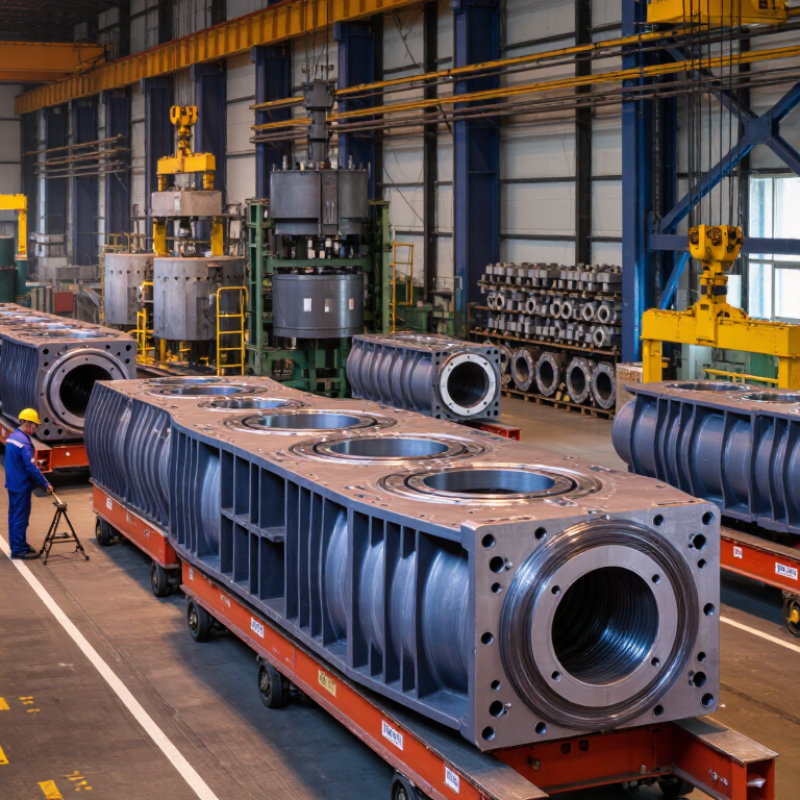
Fluid end modules are the pressure-bearing assemblies at the working end of a pump. They contain fluid passages, valves, seats, plungers, and sealing interfaces. During operation, these parts face repeated pressure pulses, abrasive solids, temperature changes, and chemical exposure. Think of a steel block with narrow channels and moving contact points. Small surface damage can become a leak, vibration, or unplanned shutdown. The module turns mechanical motion into controlled fluid movement.

Their importance is practical, not cosmetic. A well-designed module keeps pressure stable and protects the pump’s power end from fluid intrusion. Engineers assess metallurgy, wall thickness, fatigue resistance, machining accuracy, and replaceable wear parts. Inspection records should identify heat treatment, dimensional checks, pressure tests, and material certificates. In field work, technicians also examine valve springs, seating marks, thread condition, and seal compression. A clean fit matters. Even a correct part can fail when assembled carelessly.

Manufacturers are often compared by casting quality, forging practice, testing discipline, and technical support. Yet a ranking alone can mislead buyers. Service conditions differ widely between water, slurry, and corrosive fluids. The strongest module on paper may not suit every application. I have seen maintenance teams focus on purchase price and overlook spare-part compatibility. That choice can extend downtime. Better selection connects operating data with verified engineering limits, while leaving room to question old assumptions.

How Are China’s Top 10 Fluid End Module Manufacturers Identified?

Identifying China’s top ten fluid end module manufacturers requires more than checking export volume or online visibility. A reliable assessment begins with verified production capacity, engineering experience, and documented quality systems. Researchers should examine factory records, machining equipment, inspection procedures, and employee expertise. A clean workshop matters, but it does not prove consistent performance.

The review should compare material traceability, forging quality, heat treatment, and dimensional accuracy. Inspectors can request sample reports for pressure testing, non-destructive examination, and hardness checks. They should also review failure rates, warranty handling, delivery records, and technical support. Compliance with recognized industrial standards strengthens credibility, although certificates alone are not enough. A site audit can reveal details that brochures often omit.

A weighted scoring model makes the selection more transparent. Manufacturing capability might receive 30 percent, product reliability 25 percent, technical development 20 percent, service 15 percent, and business stability 10 percent. Independent customer interviews can test whether published claims match field experience. Still, this method has limits. Some performance data remains confidential, and smaller factories may lack polished documentation. That does not automatically indicate weak engineering. Repeated sampling, supplier verification, and careful human judgment are necessary before naming a manufacturer among the top ten.

China Top 10 Fluid End Modules Manufacturers? – How Are China’s Top 10 Fluid End Module Manufacturers Identified?
No. Evaluation Dimension Weight Measurable Benchmark Required Verification Evidence Why It Matters
1 Product Scope 10% Ability to supply complete fluid-end modules, including liners, pistons, valves, seats, covers, gaskets and related replacement parts. Current product catalogue, technical drawings, parts lists and documented compatibility data for the applicable mud-pump models. Confirms that the supplier provides a complete module rather than only individual components.
2 Material Traceability 12% Material certificates should identify the material grade, heat or batch number, supplier and applicable mechanical-property results. Mill test certificates, heat-number records, receiving inspection reports and traceability procedures. Supports consistent performance and enables investigation of material-related failures.
3 Pressure-Test Capability 12% Documented hydrostatic or pressure-test procedures with defined test pressure, holding time, acceptance criteria and calibrated instruments. Approved test procedures, completed test records, calibration certificates and nonconformance records. Reduces the risk of leakage or structural failure during high-pressure drilling operations.
4 Non-Destructive Examination 10% Risk-based use of inspection methods such as visual inspection, magnetic-particle testing or ultrasonic testing for relevant metallic parts. NDE procedures, operator qualifications, inspection reports and records showing acceptance criteria. Helps detect surface and internal discontinuities that may not be visible during routine inspection.
5 Dimensional Interchangeability 12% Critical dimensions, connection interfaces, tolerances and sealing surfaces must conform to the approved drawing or equipment-interface specification. Inspection plans, coordinate-measuring or calibrated-gauge records, dimensional reports and revision-controlled drawings. Improves installation fit, reduces field modification and limits unplanned downtime.
6 Manufacturing Quality System 10% A documented quality-management system with controlled procedures, internal audits, corrective actions and change management. Valid ISO 9001 certificate where applicable, audit reports, quality manual and corrective-action records. Demonstrates repeatable process control instead of relying only on final inspection.
7 Surface Treatment and Wear Control 10% Defined material, heat-treatment, coating or hardening requirements for wear-sensitive parts such as liners, valve seats and pistons. Heat-treatment charts, coating or hardness reports, process parameters and sample inspection results. Indicates the supplier’s ability to address abrasive drilling fluids and cyclic loading.
8 Standards and Compliance 8% Technical documentation should identify applicable customer specifications and relevant industry standards, such as API or ASTM requirements where contractually specified. Standards matrix, declarations of conformity, controlled specifications and third-party inspection documents when required. Makes product requirements clear and improves comparability across suppliers.
9 Delivery and Supply Capacity 8% Evaluation of stated production capacity, standard lead time, spare-parts availability, export packaging and delivery-performance history. Capacity statement, production schedule, sample purchase-order records, inventory policy and logistics documentation. Measures whether the supplier can support both planned maintenance and urgent replacement demand.
10 After-Sales Technical Support 8% Availability of installation guidance, maintenance instructions, failure-analysis support, warranty terms and technical-response procedures. Product manuals, warranty policy, response-time commitments, service records and documented root-cause analyses. Provides evidence of lifecycle support after delivery rather than focusing only on the initial sale.
Method note: The percentage values are an illustrative, transparent scoring model. A manufacturer can be shortlisted for a Top 10 comparison only after documentary review, sample inspection, reference checks and—where required—independent third-party verification.

Profiles of China’s Top 10 Fluid End Module Manufacturers

China’s top ten fluid end module manufacturers differ in engineering depth, production scale, and service reach. This profile-based review focuses on practical evidence, including machining accuracy, material control, pressure testing, and field support. Manufacturer One emphasizes forged alloy steel bodies for demanding drilling cycles. Manufacturer Two specializes in precision valve pockets and consistent internal finishing. Manufacturer Three offers modular designs that simplify replacement and warehouse planning.

Manufacturer Four combines CNC machining with documented heat-treatment records. Manufacturer Five supports custom dimensions for different pump configurations and operating pressures. Manufacturer Six is known for shorter production cycles, although buyers should verify inspection capacity during peak demand. Manufacturer Seven provides strong non-destructive testing and maintains traceability from billet to finished module. Manufacturer Eight focuses on corrosion-resistant materials for harsh fluid environments. Small details matter.

Manufacturer Nine has broader export experience, with packaging designed to protect sealing surfaces during long-distance transport. Manufacturer Ten competes through responsive technical communication and adaptable batch sizes. Across these profiles, reliable manufacturers normally provide material certificates, dimensional reports, hydrostatic test results, and replacement guidance. They should also explain limits clearly instead of promising universal compatibility. No supplier is flawless. Public information can remain uneven, and factory visits may reveal differences between documented procedures and daily practice. Buyers should compare test records, warranty terms, machining capability, and after-sales response before making a decision.

China Top 10 Fluid End Modules Manufacturers

Pressure ratings are an important specification when evaluating fluid end modules for oilfield reciprocating pumps. The chart below presents commonly recognized API 6A rated working-pressure classes in psi and does not compare individual companies or brands.

Higher pressure classes generally require stronger materials, tighter manufacturing tolerances, and more demanding testing procedures.

How Do These Manufacturers Compare in Quality and Performance?

Comparing the top ten fluid end module manufacturers requires more than catalogue ratings. In field inspections, I examine forging quality, bore alignment, heat treatment, and seal fit. These details often determine whether a module survives abrasive slurry and repeated pressure cycles. Reliable manufacturers provide material certificates, dimensional reports, and traceable inspection records. Their modules typically deliver stable discharge pressure, lower vibration, and fewer unplanned seal replacements. However, a polished report does not guarantee performance. I have seen components pass factory checks yet lose efficiency after installation. Machining tolerance, assembly cleanliness, and operator training can change the result. Small differences matter.

Performance comparisons should use identical test conditions. Record pressure, flow rate, fluid temperature, vibration, and operating hours. A module that performs well with clean water may struggle with sand-heavy fluid. Look for crack-resistant alloys, replaceable wear parts, and easy maintenance access. Response time also matters when pressure changes suddenly. Some manufacturers offer excellent engineering but inconsistent delivery documentation. Others provide reliable parts with less advanced surface treatment. That trade-off deserves scrutiny. Cost alone is a weak quality signal. A cheaper module may create more downtime, while an expensive one may include features the site never uses. Independent inspection before shipment remains valuable, even when supplier confidence seems high.

How to Choose the Right Chinese Fluid End Module Manufacturer

Choosing a Chinese fluid end module manufacturer requires more than comparing prices. Start with the module’s working conditions, including pressure, temperature, fluid type, and duty cycle. A supplier should explain how its design fits your pump and operating environment. Ask for drawings, material certificates, heat-treatment records, and inspection procedures. Ask for evidence.

Inspect machining quality closely. Sealing faces should be smooth, accurate, and free from visible tool marks. Thread dimensions must match approved drawings. Critical parts should have traceable heat numbers and documented non-destructive testing. Pressure-test records should identify the test medium, duration, and acceptance criteria. Details matter.

A factory visit can reveal more than a sales presentation. Check machining centers, storage conditions, calibration labels, and how rejected parts are controlled. Speak with engineers, not only account managers. Review similar production references, realistic lead times, spare-part support, and communication during design changes. A capable manufacturer should accept an independent inspection before shipment. Measure twice. Expect revisions.

Do not choose solely by the lowest quotation. A cheaper module may hide weaker metallurgy, limited testing, or inconsistent tolerances. Confirm the supplier’s quality system and its experience with your required standards. Request a sample inspection plan before placing a large order. No supplier is perfect. Even a detailed audit can miss a problem, so define corrective-action steps, warranty terms, and documentation requirements in writing.