Top Stainless Pipe Manufacturers Worldwide?
Choosing the top stainless pipe manufacturers worldwide requires more than comparing production volume or polished websites. Buyers need evidence of consistent metallurgy, accurate dimensions, reliable delivery, and responsible quality control. A manufacturer may appear impressive, yet its performance can vary between seamless, welded, sanitary, and high-pressure products.
This guide examines manufacturers through practical purchasing criteria. These include material grades, manufacturing methods, wall-thickness tolerance, surface finish, testing procedures, and traceability. Experienced suppliers should provide mill test certificates, inspection records, and clear information about standards such as ASTM, ASME, EN, or JIS. Factory capability matters too. Modern forming lines, controlled heat treatment, and non-destructive testing can reveal how seriously a company protects product integrity.
Details matter.
A strong stainless pipe supplier should understand the buyer’s operating environment, not merely quote a low price. Chemical plants, food facilities, offshore systems, and architectural projects demand different corrosion resistance and surface requirements. Independent audits and verified customer references can strengthen confidence, but no ranking is permanently correct. Market conditions change, and even respected manufacturers may face delays, capacity limits, or uneven regional service. That is an uncomfortable point, but it deserves attention.
The companies discussed here are assessed from a buyer’s perspective, using public technical information, industry reputation, documented certifications, and practical supply considerations. Readers should still confirm current approvals, production capacity, and delivery terms before placing an order. The best choice is rarely the biggest name. It is the manufacturer that consistently delivers suitable stainless pipe, accurate documentation, and dependable support for the intended application.
Stainless Steel Pipe Manufacturing: Products and Core Processes
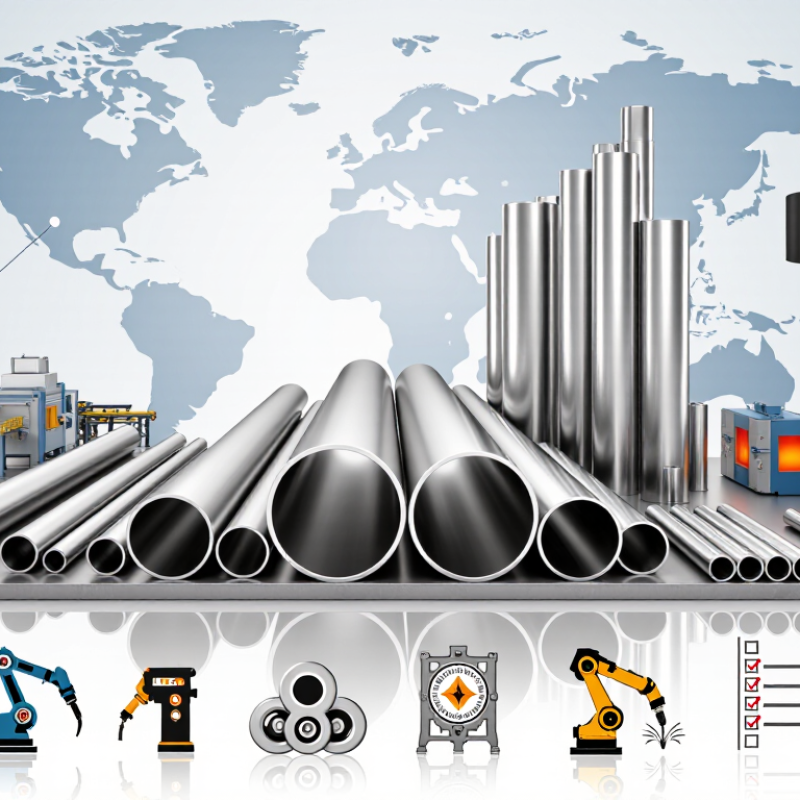
Stainless steel pipe manufacturing begins with the service conditions, not the sales brochure. Manufacturers produce seamless, welded, sanitary, instrumentation, and large-diameter pipes for chemical, energy, food, and construction systems. Each product requires a suitable grade, wall thickness, diameter, and surface finish. A polished surface looks impressive. It does not automatically prove corrosion resistance.
Production usually starts with melting and alloy control. Chromium, nickel, molybdenum, and carbon levels must stay within the specified range. Solidification creates billets or slabs, which are heated before forming. Seamless pipe may be pierced and rolled over a mandrel. Welded pipe is formed from strip and joined along a controlled seam. Welding speed, heat input, and shielding gas matter greatly. Small deviations can affect weld quality.
Heat treatment restores useful mechanical properties after forming. Annealing can reduce internal stress and improve ductility. Pickling removes scale, while passivation supports a stable protective surface.
Sizing and straightening bring the pipe closer to dimensional requirements. Experienced quality teams use ultrasonic or radiographic inspection, hydrostatic testing, hardness checks, and chemical analysis. They also review traceability records from raw material to shipment.
No process is perfect. Poor storage can damage a carefully finished pipe. Moisture, carbon-steel contact, and rough handling may create avoidable contamination. Reliable manufacturers inspect these details, although inspection records should never replace independent verification. A practical buyer should compare tolerances, test methods, weld procedures, surface condition, and delivery controls rather than relying on appearance alone.
How Manufacturers Differ by Grades, Standards, and Production Capacity
Top Stainless Pipe Manufacturers Worldwide?
The strongest stainless pipe manufacturers differ in more than price. Grade selection comes first. Austenitic 304 and 316 remain common for general processing and corrosive service. Duplex grades offer higher strength and better chloride resistance. High-temperature projects may require specialized nickel-bearing grades. The International Stainless Steel Forum reported global stainless crude steel production of about 58.4 million tonnes in 2023. That volume shows market scale, but it does not prove pipe quality.
Standards reveal manufacturing discipline. ASTM A312 covers common seamless and welded stainless steel pipes for pressure applications. EN 10216 and EN 10217 address seamless and welded tubes under European requirements. ISO 9001 certification supports process control, but it cannot replace material testing. Buyers should request heat numbers, chemical analysis, tensile results, hydrostatic tests, and dimensional records. Small details matter.
Capacity needs closer inspection. A large melt shop may still outsource bright annealing, cutting, or non-destructive testing. That weakens traceability. Effective capacity includes melting, hot forming, cold drawing, welding, heat treatment, inspection, and finishing. Industry capacity figures can also be optimistic. A 2023 World Steel Association report placed global crude steel production near 1.89 billion tonnes, yet stainless pipe represents only a small portion. In practice, delivery reliability depends on available lines, qualified operators, and current order loads—not installed equipment alone. A factory visit often reveals more than a brochure. The hard question is whether every batch receives the same attention.
Major Stainless Pipe Manufacturers Across Global Regions
Top Stainless Pipe Manufacturers Worldwide?
Major stainless pipe manufacturers are distributed across several industrial regions, not one dominant market. China remains a major production center, supported by large melting capacity, integrated mills, and extensive export networks. Japan and South Korea are recognized for tight dimensional control and demanding process applications. European producers often focus on engineered tubing, energy equipment, and corrosion-resistant systems. North American manufacturers serve oil, gas, chemical, food, and infrastructure projects, with shorter regional supply chains.
The International Stainless Steel Forum reported global stainless crude steel production of about 58.4 million tonnes in 2023. Asia produced the clear majority, while Europe and the Americas maintained important specialist capacity. These figures indicate scale, but they do not prove pipe quality. Buyers should compare welding procedures, heat-treatment records, hydrostatic testing, and traceability documents. A polished surface can hide weak process control.
Regional demand also shapes manufacturer selection. Energy projects may require seamless pipe with strict pressure testing. Food facilities usually prioritize hygienic finishes and cleanability. Construction projects often favor welded pipe for availability and cost control. ASTM, EN, and JIS requirements help establish a common technical baseline. However, certificates can vary in detail. Independent inspection is still sensible, especially for large orders or critical service. Rankings are useful, but they remain imperfect without project-specific evidence.
Top Stainless Pipe Manufacturers Worldwide? - Major Stainless Pipe Manufacturers Across Global Regions
Regional overview of stainless-steel pipe manufacturing capabilities and applicable standards. This is not a company ranking; no manufacturers or brands are identified.
| Global region |
Established manufacturing areas |
Common product capabilities |
Relevant standards |
Typical end-use sectors |
| East Asia |
Manufacturing activity is concentrated in industrial economies including China, Japan, South Korea, and Taiwan. |
Welded and seamless austenitic stainless pipe; product ranges commonly include 304/304L and 316/316L grades. |
ASTM A312; JIS G3459; ASME B36.19M for stainless-steel pipe dimensions. |
Chemical processing, construction, food processing, and general industrial service. |
| Europe |
Established production and processing capacity is found across several European industrial countries. |
Welded and seamless stainless tubes and pipes, with austenitic and duplex options available across the wider market. |
EN 10217-7 for welded stainless-steel tubes for pressure purposes; EN 10216-5 for seamless stainless-steel tubes for pressure purposes. |
Process industries, energy, transportation, building services, and equipment manufacturing. |
| North America |
Pipe production and finishing serve industrial markets in the United States, Canada, and Mexico. |
Welded and seamless pipe for pressure, corrosion-resistant, and general industrial applications. |
ASTM A312 for seamless, welded, and heavily cold-worked austenitic stainless-steel pipe; ASTM A358 for electric-fusion-welded austenitic alloy-steel pipe. |
Oil and gas, chemical processing, power generation, water systems, and industrial construction. |
| South Asia |
India is a major regional base for stainless-steel production and downstream pipe and tube manufacturing. |
A broad mix of welded and seamless products, including standard austenitic grades and selected higher-alloy grades. |
ASTM A312 and other applicable ASTM or EN specifications, as specified by the purchaser and product application. |
Infrastructure, chemical processing, food and beverage, pharmaceuticals, and energy. |
| Middle East |
Regional supply includes local production and processing alongside imports from international manufacturing hubs. |
Supply commonly focuses on project specifications for corrosion-resistant piping, with product availability varying by grade and size. |
ASTM A312 and project-specific ASME, ASTM, or EN requirements, depending on the service and design code. |
Oil and gas, desalination, water treatment, petrochemicals, and power projects. |
Specifications and regional product availability vary by manufacturer, grade, dimensions, manufacturing route, and project requirements. Confirm compliance against the current standard and material test documentation.
Industries and Applications Served by Leading Producers
Leading stainless pipe manufacturers supply sectors where corrosion resistance, hygiene, and dependable pressure performance matter.
Their products serve food and beverage plants, pharmaceutical facilities, chemical processing sites, power stations, and building services. The right pipe depends on the fluid, temperature, pressure, and cleaning routine—not just the alloy label.
In food production, smooth internal surfaces can support effective cleaning in dairy lines, breweries, and processing equipment. Pharmaceutical applications often require documented material traceability and carefully controlled fabrication. Small details matter. A poorly specified finish or connection can complicate maintenance, even when the base metal is suitable.
Chemical plants use stainless piping to carry process fluids that may attack ordinary steel, though no grade resists every chemical under every condition. Water treatment, desalination, and marine projects also rely on suitable grades for wet, salty environments. In energy facilities, pipes may face heat, vibration, or demanding pressure cycles. Producers commonly offer different dimensions, wall thicknesses, and welded or seamless options, but buyers still need to verify relevant specifications and test records. It is easy to focus on corrosion alone; support spacing, weld quality, and inspection access deserve equal attention.
Key Factors for Comparing Worldwide Manufacturers
Comparing worldwide stainless pipe manufacturers requires more than checking catalogue prices. Start with material traceability. Ask for mill test certificates that identify the heat number, grade, chemistry, and mechanical properties. Then verify dimensions, wall-thickness tolerance, surface finish, and manufacturing route against the project specification. A polished sample can look convincing; a batch record is more useful.
Production capacity matters, but it is not proof of consistent quality. World Stainless reported global stainless steel melt-shop production of 58.4 million tonnes in 2023, up 4.6% from 2022. That figure describes raw steel, not finished pipe, so buyers should not treat it as a measure of a supplier’s pipe output. Request recent inspection records, non-destructive testing procedures, and evidence that the manufacturer can repeat the required tolerances across a full order. Check whether certificates match the actual shipment. Small mismatches matter.
Compare delivery performance, technical support, and total landed cost alongside price. Freight, packaging, customs handling, and replacement lead times can change the apparent bargain. For quality systems, ISO 9001 certification can indicate documented controls, but it does not certify every pipe. Confirm product-specific requirements against relevant standards, such as ASTM specifications, and check the certificate scope directly. One awkward detail: supplier audits take time, and remote reviews may miss shop-floor problems. That uncertainty deserves attention.
This chart presents key material benchmarks used when comparing stainless pipe manufacturers worldwide. The figures show minimum chromium, nickel, and molybdenum content commonly specified for ASTM 304, 316, and 321 austenitic stainless steel grades. Higher alloy content can support improved corrosion resistance, but actual performance also depends on manufacturing quality, heat treatment, testing, certifications, and dimensional control.