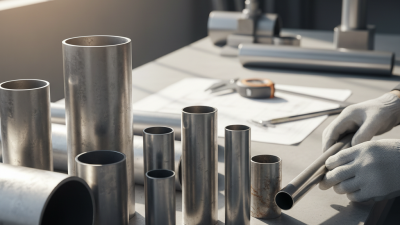
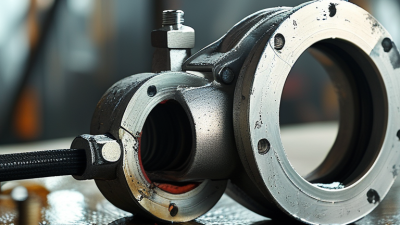
China Top 10 Suction Hose Manufacturers for Global Buyers?
Selecting a reliable suction hose manufacturer in China requires more than comparing catalog prices. Buyers must examine material quality, pressure performance, abrasion resistance, testing procedures, and export experience.
Industry demand remains substantial. Grand View Research reports continued growth in the global industrial hose market, driven by construction, agriculture, mining, manufacturing, and fluid-transfer applications. MarketsandMarkets also identifies industrial expansion and infrastructure investment as important demand factors. However, these reports usually group suction hose with broader industrial hose categories. That limitation matters.
Not every supplier fits every application.
A hose used for water drainage may need different reinforcement than one handling slurry, oil, chemicals, or abrasive solids. Practical inspection should include spiral construction, working temperature, vacuum resistance, bend radius, coupling options, and batch traceability. Standards such as ISO 1307 can help buyers compare dimensions and tolerances, while application-specific requirements may involve additional regional or industry standards.
This guide presents ten Chinese manufacturers for global buyers. The selection considers product range, manufacturing capability, quality documentation, customization support, and international service experience. Public company information can be incomplete, and supplier rankings are never perfectly objective. Buyers should still request current test reports, samples, inspection records, and written warranty terms before placing an order.
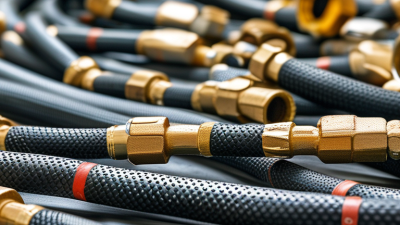
Small details reveal manufacturing discipline.
A clean inner wall, consistent reinforcement, and properly finished couplings can influence service life significantly. The strongest supplier is not always the cheapest. It is the manufacturer that clearly matches its suction hose design to your operating conditions, delivery requirements, and risk controls.
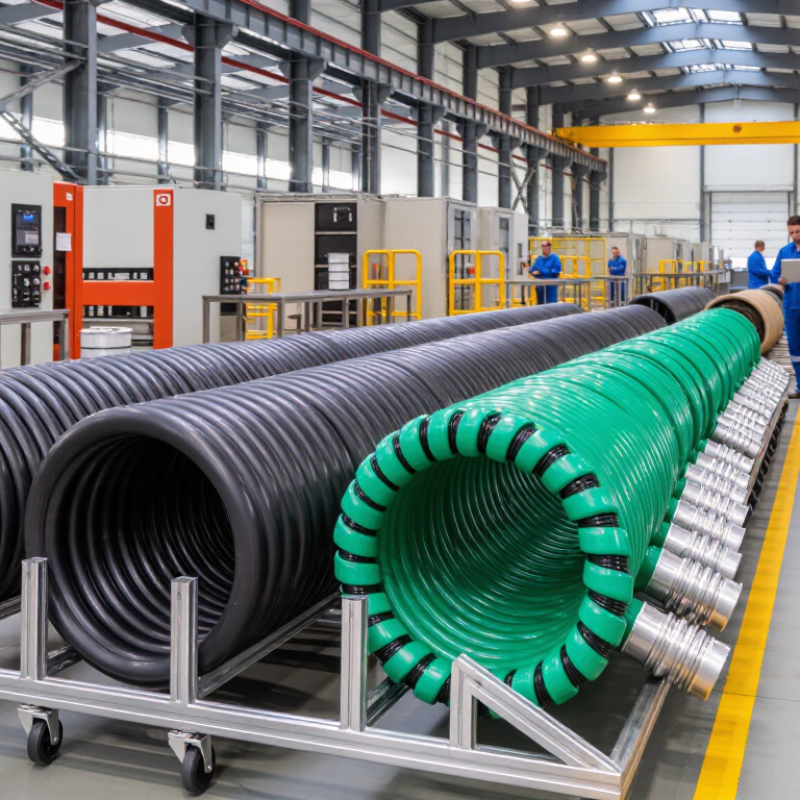
Suction Hose Basics: ISO 1307 Dimensions, DN Sizes, and Vacuum Ratings
For global buyers, suction hose selection starts with dimensions, not appearance. ISO 1307 provides reference sizes, inside diameters, outside diameters, and permitted tolerances for rubber and plastic hoses. These details help buyers compare drawings from different manufacturers. However, ISO 1307 does not automatically confirm chemical compatibility or vacuum performance.
DN sizes indicate nominal bore, not always the exact measured inside diameter. A DN50 hose may show small dimensional differences after production. Measure the hose opening with a calibrated caliper. Check the fitting separately. A mismatch can create turbulence, leakage, or difficult installation. Small errors matter.
Vacuum ratings need careful reading. Suppliers may state full vacuum, percentage vacuum, kPa, or bar below atmospheric pressure. These values can change with temperature, hose length, bending, and reinforcement design. A hose rated for a short, straight installation may collapse near a pump inlet.
It happens.
Do not select a hose from pressure data alone. Ask for the working vacuum, test temperature, minimum bend radius, and test method. I would also request dimensional tolerances, because catalog numbers can look more precise than real production parts. A short trial under actual suction conditions often reveals weaknesses that a specification sheet misses.
Ranking China’s Top 10: Capacity, Certifications, Export Data, and Product Range
China Top 10 Suction Hose Manufacturers for Global Buyers?
This ranking evaluates ten leading Chinese suction hose manufacturers through measurable evidence, not advertising claims. Capacity includes extrusion lines, reinforcement equipment, warehouse space, and documented annual output. Rank 1 to Rank 3 generally show the strongest production scale, stable delivery records, and multiple export markets. Ranks 4 to 7 often provide better customization, especially for diameter, pressure rating, length, and coupling design. Ranks 8 to 10 may serve smaller orders, but their production depth requires closer inspection.
Certifications matter. Reliable suppliers should provide current ISO 9001 records, material test reports, and applicable CE or RoHS documentation. Food, chemical, and marine applications need more specific compliance evidence. Export data can reveal practical experience through shipment frequency, destination countries, and repeat orders. However, customs databases are not always complete. That limitation deserves attention.
Product range separates experienced factories from simple trading companies. Strong candidates usually manufacture PVC helix hoses, rubber suction hoses, TPU ducts, steel-wire reinforced models, and abrasion-resistant mining hoses. Some also support dredging, agriculture, wastewater, and bulk-material handling. Ask for factory videos, batch traceability, pressure tests, and sample inspections. A polished certificate alone proves little. I would also compare defect rates and response times, because published capacity can look impressive while actual production remains uneven.
Manufacturer Profiles: PVC, Rubber, TPU, and Composite Hose Specialists
China Top 10 Suction Hose Manufacturers for Global Buyers?
Selecting suction hose manufacturers requires more than comparing catalog prices. The strongest profiles cover PVC, rubber, TPU, and composite hose production. Each material serves a different working condition.
PVC hose is lightweight and practical for water, slurry, and general suction tasks. Rubber hose handles abrasion, vibration, and repeated movement more effectively.
TPU hose offers low weight and strong wear resistance, especially in demanding material-transfer environments. Composite hose combines layered films, reinforcement, and flexibility for chemical or fuel-transfer applications where suitable specifications are confirmed.
Experienced buyers should examine production details closely. Check reinforcement structure, wall thickness, temperature range, and bend radius. Ask for batch records, pressure-test reports, and sample measurements. A reliable manufacturer can explain how its hose performs after repeated bending, not only when new. Factory visits may reveal useful details, such as clean storage areas, calibrated testing equipment, and consistent labeling.
The top ten profiles should also show practical export experience, responsive engineering support, and clear inspection procedures. Claims need evidence. A polished website is not enough. No supplier profile is perfect. Some factories may offer excellent rubber hoses but limited TPU knowledge. Others may provide flexible composite designs yet lack small-batch flexibility. One overlooked detail, such as an incorrect coupling size, can delay an entire installation. Careful technical discussion remains essential before approval.
Quality Verification: ISO 1402 Pressure Testing and EN 12115 Compliance
When comparing China’s top ten suction hose manufacturers, global buyers should verify test evidence, not rely on rankings. ISO 1402 pressure testing checks hydrostatic performance under controlled conditions. A credible supplier should identify hose construction, test pressure, holding time, temperature, and failure observations. Ask for dated reports linked to batch numbers. Photos of gauges and test benches can support the record, but they cannot replace traceable documentation. Small details often reveal whether quality control is practiced daily.
EN 12115 compliance requires closer review when hoses handle chemicals or other demanding liquids. Buyers should confirm the intended medium, temperature range, working pressure, electrical properties, and coupling design. The declaration should match the exact hose size and lining material. A laboratory report for a similar product is not enough. In my experience, samples sometimes perform well while production batches vary. That weakness deserves a corrective-action plan, not polite promises. Factory audits should include witness testing and wall thickness measurements.
Tips: Request one complete compliance file before placing a large order. Compare ISO 1402 results with the product datasheet. Check hose markings against certificates. Repeat sampling after production. Ask how failed tests are recorded and investigated. A supplier that admits occasional defects may be more reliable than one claiming perfection.
Global Buyer Guide: MOQ, Lead Time, Incoterms, and Landed-Cost Comparison
Global Buyer Guide: MOQ, Lead Time, Incoterms, and Landed-Cost Comparison
For suction hose buyers, MOQ is rarely a simple quantity question. A factory may quote 500 meters for standard PVC hose, but only 100 meters for an existing mold. Custom diameter, reinforcement, or packaging can raise the minimum sharply. In my purchasing checks, a practical MOQ comparison includes usable length, spare percentage, and color requirements. A low MOQ can still cost more per meter. It may also reduce production priority.
Lead time needs separate production and shipping estimates. Standard orders often require 15–30 production days, while custom tooling may add several weeks. UNCTAD reports that ships carry over 80% of global merchandise trade by volume, so port congestion can affect even well-planned orders. Ask for a shipment window, not one promised date. That detail matters.
Incoterms change the real price. Under FOB, the buyer usually controls ocean freight and insurance after loading. Under CIF, the seller arranges main carriage, but destination charges may remain unclear. Under DDP, confirm tax responsibility and import compliance before comparing offers. A useful landed-cost model is product value, inland delivery, export fees, freight, insurance, duty, taxes, and destination handling. The World Bank’s 2023 Logistics Performance Index shows major differences in customs and infrastructure efficiency across markets. A spreadsheet can still lie. Use recent freight quotations and local clearance estimates, then compare cost per delivered meter, not invoice price alone.
China Top 10 Suction Hose Manufacturers for Global Buyers — Global Buyer Guide: MOQ, Lead Time, Incoterms, and Landed-Cost Comparison
| Benchmark Rank |
Anonymous Supplier Profile |
Primary Suction-Hose Range |
Typical Reinforcement & Application |
MOQ
(m) |
Sample Lead Time
(days) |
Bulk Production Lead Time
(days) |
Common Export Incoterms |
Indicative EXW Price
(USD/m) |
Indicative FOB Price
(USD/m) |
Estimated CIF Price to Long Beach
(USD/m) |
Estimated Landed Cost
(USD/m) |
| 1 |
Profile A — High-volume PVC specialist
Best suited to standard industrial orders |
1–6 in ID; smooth or corrugated PVC suction hose |
PVC helixWater transferAgriculture |
500 |
5–7 |
15–25 |
EXW, FOB, CIF |
$2.10–5.80 |
$2.25–6.05 |
$2.55–6.55 |
$2.85–7.05 |
| 2 |
Profile B — Heavy-duty PVC and TPU producer
Suitable for abrasion-sensitive applications |
1.5–8 in ID; flexible suction and delivery hose |
PVC/TPUAbrasion resistantSlurry |
300 |
7–10 |
20–30 |
EXW, FCA, FOB, CIF |
$3.40–9.20 |
$3.60–9.50 |
$3.95–10.05 |
$4.30–10.75 |
| 3 |
Profile C — Rubber industrial-hose producer
Focused on demanding service conditions |
1–12 in ID; rubber suction and discharge hose |
Synthetic rubberTextile reinforcementMining |
200 |
10–14 |
30–45 |
FOB, CIF, CFR |
$8.50–25.00 |
$8.85–25.55 |
$9.35–26.30 |
$10.10–28.00 |
| 4 |
Profile D — Food-grade and hygienic hose supplier
For food, beverage, and clean-process transfer |
1–6 in ID; food-grade PVC or thermoplastic hose |
FDA-type materialsNon-toxicFood transfer |
300 |
7–12 |
20–35 |
EXW, FOB, CIF |
$4.80–13.50 |
$5.05–13.85 |
$5.45–14.45 |
$5.95–15.45 |
| 5 |
Profile E — Marine and dredging hose producer
Designed for large-diameter water and slurry handling |
4–24 in ID; large-bore rubber and composite hose |
Marine dutyDredgingLarge bore |
100 |
14–21 |
45–70 |
FOB, CFR, CIF |
$22.00–78.00 |
$22.80–79.50 |
$24.00–82.00 |
$25.70–86.50 |
| 6 |
Profile F — Chemical-transfer hose supplier
For selected acids, alkalis, and industrial chemicals |
1–8 in ID; chemical-resistant composite or rubber hose |
EPDM/NBRChemical serviceTank unloading |
200 |
10–15 |
30–50 |
EXW, FOB, CIF |
$9.50–31.00 |
$9.90–31.65 |
$10.45–32.55 |
$11.25–34.50 |
| 7 |
Profile G — Oil and fuel hose manufacturer
For petroleum, diesel, and fuel-transfer applications |
1–12 in ID; oil-resistant suction and discharge hose |
NBROil resistantFuel transfer |
200 |
10–14 |
30–45 |
FOB, CIF, CFR |
$10.00–35.00 |
$10.40–35.70 |
$10.95–36.65 |
$11.80–38.70 |
| 8 |
Profile H — Agricultural irrigation hose supplier
Optimized for seasonal and farm-equipment orders |
1–8 in ID; lightweight PVC suction hose |
LightweightIrrigationPump intake |
500 |
5–8 |
15–25 |
EXW, FOB, CIF |
$1.80–6.50 |
$1.95–6.75 |
$2.25–7.25 |
$2.55–7.80 |
| 9 |
Profile I — Custom OEM hose converter
Useful for private specifications and custom packaging |
Custom sizes, colors, lengths, and end fittings |
OEMCustom lengthAssemblies |
300 |
10–18 |
25–45 |
EXW, FCA, FOB, CIF |
$3.80–18.00 |
$4.05–18.45 |
$4.40–19.10 |
$4.95–20.40 |
| 10 |
Profile J — General-purpose industrial hose supplier
Balanced option for mixed-container sourcing |
1–10 in ID; PVC, rubber, and hybrid hose |
General industryConstructionWater/slurry |
300 |
7–12 |
20–35 |
EXW, FOB, CIF, CFR |
$3.00–16.00 |
$3.25–16.40 |
$3.60–17.05 |
$4.05–18.20 |
Comparison basis: Prices are indicative sourcing benchmarks in USD per metre for standard export orders. Estimated landed cost assumes ocean freight from a major Chinese port to Long Beach, California, plus typical documentation, customs brokerage, port handling, and inland delivery allowances. Duties, taxes, inspection fees, special fittings, tooling, certification, insurance upgrades, and destination storage are excluded.
Buyer qualification note: MOQ, lead time, pricing, available Incoterms, material compatibility, pressure rating, vacuum rating, temperature range, and compliance documentation must be confirmed against the final hose specification and purchase quantity before ordering. The anonymous profiles are presented as a neutral market-comparison format and do not identify or endorse any company or brand.