Top 10 Galvanized Closed Head Steel Drum Manufacturers?
Choosing a reliable Galvanized Closed Head Steel Drum manufacturer requires more than comparing prices. The drum must withstand handling, storage, transport, and changing environmental conditions. Its zinc coating helps resist corrosion, while the welded body and fixed top support secure containment. Small details matter. Bung threads, gasket fit, seam quality, and lid thickness can affect daily performance.
This introduction presents ten manufacturers commonly considered in the industrial packaging market. The comparison focuses on manufacturing experience, material consistency, production capacity, quality control, and customer support. It also considers practical options, including drum sizes, coating specifications, closure types, pallet compatibility, and labeling requirements. A strong supplier should provide clear technical data and responsive communication. That matters during repeat purchasing.
No ranking is perfect. Manufacturer capabilities can change. Product quality may also vary between factories, regions, and production batches. Buyers should confirm current certifications, test reports, coating weights, and applicable transport approvals before placing an order. Samples deserve careful inspection. Check the interior, exterior finish, bung seal, and drum balance on a flat surface. Ask how rejected units are identified and handled. These questions reveal more than a polished brochure.
The selected companies are therefore discussed as practical options, not universal winners. Their suitability depends on the stored material, filling process, climate, handling equipment, and distribution route. Some manufacturers may excel at volume production, while others offer better customization or shorter lead times. Readers should compare verified specifications with their own operating needs. A careful decision usually begins with reliable evidence, not a bold ranking.
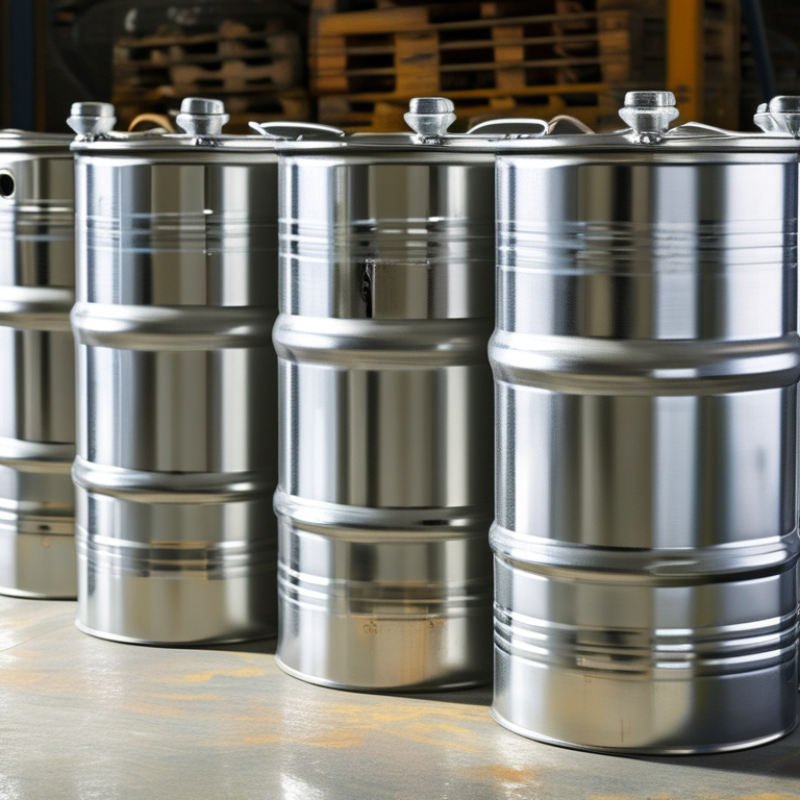
Global Scope: 55-Gallon (208-L) Galvanized Closed-Head Steel Drums
The global market for 55-gallon (208-L) galvanized closed-head steel drums serves chemicals, lubricants, coatings, and industrial ingredients. Grand View Research estimates the global steel drums market at more than USD 12 billion, with steady growth through 2030. That growth increases pressure on manufacturers to prove quality, not merely production volume.
A credible top-ten review should examine ISO 15750 compatibility, steel thickness, zinc-coating consistency, bung performance, and leak testing. The United Nations packaging recommendations also emphasize tested designs, secure closures, and reliable handling performance.
In practice, a 208-L drum may hold slightly less during transport. Headspace matters. So does pallet stability.
Experienced buyers should inspect flange seams, gasket materials, interior cleanliness, and coating damage around the chime. Salt-spray results can help, but they do not fully predict warehouse conditions. Humidity, temperature changes, and rough loading still matter. The World Steel Association identifies steel as one of the most recycled packaging materials, supporting its circular-use potential when managed correctly. However, recyclability does not excuse poor manufacturing.
Manufacturer comparisons should include batch traceability, documented pressure and drop tests, export packaging, and response times for technical claims. Price alone misleads.
I would also question rankings based only on online visibility; smaller producers may offer stronger inspection records. That detail is easy to overlook.
Ranking Method: Production Capacity, UN 1A1 Certification, and Export Reach
Top 10 Galvanized Closed Head Steel Drum Manufacturers
A credible ranking should begin with verified production capacity, not factory size alone. The strongest manufacturers operate multiple forming, welding, galvanizing, and leak-testing lines. Consistent output matters more than impressive machinery. Buyers should review monthly capacity, lead times, rejection rates, and maintenance records. A large facility can still deliver uneven batches.
UN 1A1 certification is a central ranking factor for closed head steel drums. Manufacturers should provide current test reports, certificate details, and traceable production markings. Testing should cover drop performance, stacking strength, pressure resistance, and leak prevention. Certification claims require careful checking. Some published information may be incomplete or outdated.
Tips
Compare audited capacity with actual shipment history. Ask for recent inspection records and sample drums. Check steel thickness, coating weight, seam quality, closure fit, and pallet stability. Export reach also deserves close attention. Reliable suppliers maintain experience with customs documents, container loading, port schedules, and destination-specific packaging rules. However, export volume alone does not prove quality. A manufacturer serving many markets may still struggle with smaller orders or urgent changes. This ranking should be reviewed regularly because capacity, certification status, and logistics performance can change. That is an uncomfortable limitation, but ignoring it weakens the ranking.
Compliance Benchmark: ISO 15750, UN Testing, Leak Tests, and ISO 9001
Selecting the Top 10 Galvanized Closed Head Steel Drum Manufacturers requires more than comparing prices or production volume. Compliance evidence should guide the shortlist.
ISO 15750 alignment is a useful starting point. Check drum dimensions, closure design, gasket materials, and stack performance. A reliable manufacturer should provide current specifications and controlled revision records. Small defects matter.
UN testing adds practical proof. Ask for test reports covering drop, leakproofness, hydrostatic pressure, and stacking performance. The report should identify the drum type, capacity, test date, and approval details. Do not accept a generic certificate without traceable samples.
Leak testing deserves close attention during factory evaluation. Inspect pressure-test equipment, calibration labels, sampling frequency, and rejected-drum records. A drum may look flawless while losing pressure through a poorly seated plug. Ask how operators detect that failure. Their answer reveals process maturity.
ISO 9001 certification can support confidence, but certification alone is not product proof. Review internal audits, corrective actions, incoming steel checks, coating thickness records, and closure torque controls. Experienced buyers should also request galvanized surface inspections around seams and chimes. Those areas often expose handling damage.
A credible top-ten candidate welcomes technical questions and supplies consistent documents. Still, no system is perfect. I would verify recent batch samples independently, because paperwork can lag behind production changes. One overlooked gasket variation can affect transport safety and customer acceptance.
Top 10 Galvanized Closed Head Steel Drum Manufacturers: Compliance Benchmark
Standards-based review framework covering ISO 15750, UN performance testing, leak testing, and ISO 9001. This chart shows benchmark checkpoints, not manufacturer scores.
A complete supplier review should verify steel drum conformity with ISO 15750, applicable UN packaging performance tests such as drop, leakproofness, hydrostatic pressure, and stacking tests, documented leak-test results, and an active ISO 9001 quality management system certification.
Buyer Comparison: MOQ, Lead Times, Recyclability, and Total Cost per Drum
When comparing the top 10 galvanized closed-head steel drum manufacturers, begin with MOQ and delivery reality. A low unit price may require 100 drums, while your operation needs only 24. Ask whether the MOQ applies to one size, finish, or full pallet. Confirm production time separately from shipping time. Stock drums may leave within days. Custom gauges, coatings, or plugs can add several weeks. Request a written schedule with order cut-off dates.
Recyclability also deserves close inspection. Steel is widely recyclable. However, coatings, liners, gaskets, and closures can affect processing. Ask for material specifications and recycling guidance. A drum that looks reusable may still need inspection for dents, rust, or damaged seams. Small details matter.
Total cost per drum should include freight, pallets, handling, storage, inspection, and disposal of damaged units. Cheap drums can become expensive. A practical comparison should calculate delivered cost, not only the factory quotation. Request batch records, dimensional checks, coating data, and performance certificates. Suppliers that answer clearly usually support stronger quality control. Still, documents are not proof of flawless production. A sample order and a physical inspection can reveal problems that spreadsheets miss. I would also test the closure fit by hand, because a tight-looking ring is not always a reliable seal.
