China has become a major production base for flexible fluid-transfer equipment, including lay flat hose used in irrigation, mining, construction, drainage, and emergency water delivery. Industry reports from Grand View Research and MarketsandMarkets commonly place industrial hoses within a growing global market, driven by infrastructure investment, agricultural modernization, and replacement demand. However, these reports usually combine several hose categories. They do not always isolate lay flat hose as a separate segment.
That limitation matters. A manufacturer may appear strong in general industrial hoses but lack proven experience with lightweight PVC, TPU, or reinforced rubber lay flat hose. This guide examines leading Chinese manufacturers through practical indicators, including fabric construction, pressure ratings, coupling quality, production capacity, inspection records, and export experience. TÜV, SGS, and ISO-related documentation can support supplier verification, but certificates alone are not enough. Real performance matters.
Look closely.
A reliable factory should explain its yarn structure, coating process, burst-pressure testing, and storage recommendations. Product samples should remain flexible after repeated rolling, dragging, and exposure to sunlight. Buyers should also check batch traceability, warranty terms, and technical support before placing large orders. Some rankings online rely heavily on website visibility or trading volume. That approach can mislead.
There is no universally correct top-ten list. Supplier strengths vary by application, hose diameter, working pressure, and delivery requirements. The manufacturers discussed here are therefore assessed from a buyer’s perspective, using public industry research, technical evidence, and practical procurement considerations. Some data remains difficult to verify. That uncertainty deserves honest attention.
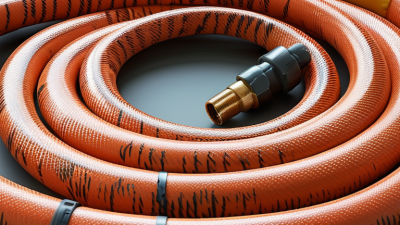
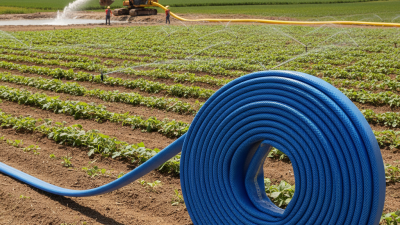
A lay flat hose is a flexible tube designed to collapse when empty and expand under pressure. Unlike rigid pipes, it stores compactly and moves easily across fields, construction sites, and factory floors. Its flat profile can reduce transport space considerably. In practical use, I have seen workers unroll these hoses beside irrigation channels, then connect them to pumps within minutes. They are commonly used for agricultural irrigation, drainage, flood control, mine dewatering, and temporary water transfer. Some versions also handle slurry or mild industrial liquids, but material compatibility must be checked carefully.
Most lay flat hoses use PVC, TPU, or reinforced rubber with woven fabric layers. The reinforcement controls pressure, while the outer coating resists abrasion and sunlight. A hose may look strong. That does not guarantee long service. Sharp gravel, excessive pressure, and poor storage can cause early failure. Chinese manufacturers typically offer different diameters, pressure ratings, connection types, and custom lengths for these conditions. Reliable production should include dimensional checks, pressure testing, fabric inspection, and traceable batch records. Ask for test data, not only attractive specifications.
A field mistake can be expensive.
When selecting a supplier, examine the hose’s working pressure, burst pressure, temperature range, and chemical resistance. Couplings should fit the pump securely and remain easy to inspect. I once underestimated bending near a connector; the hose performed well, but the joint leaked. That experience changed my inspection routine. The best choice depends on the liquid, distance, terrain, and frequency of use. Cheap pricing alone often hides replacement costs.
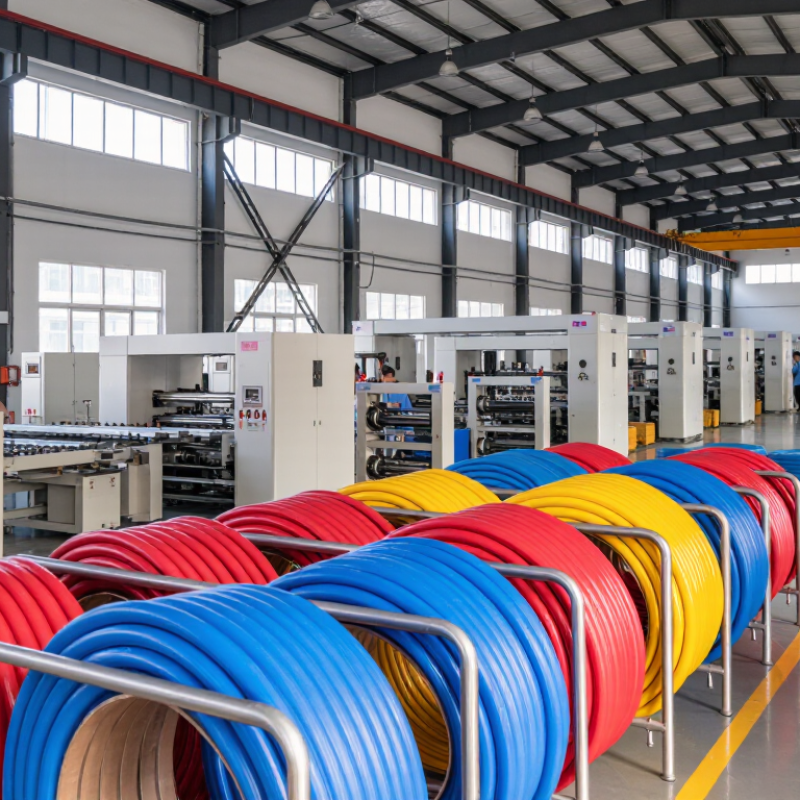
When evaluating Chinese lay flat hose manufacturers, look beyond catalog photos and low quotations. A reliable supplier should show clear factory information, stable production capacity, and documented quality procedures. During factory audits, inspect yarn preparation, coating lines, welding areas, and final packing. Ask to see recent inspection records, not only prepared samples. Shortcuts appear quickly.
Request samples from different production lots and test them under realistic conditions. Check working pressure, burst pressure, abrasion resistance, flexibility, and coupling security. Measure hose diameter and wall thickness at several points. The surface should feel even, without thin patches, bubbles, or exposed reinforcement. Confirm the polymer type and ask whether test results come from an independent laboratory. A professional manufacturer should explain tolerances clearly.
Traceability also matters. Each batch should connect to raw material records, production dates, and inspection reports. Review export packaging, labeling, and moisture protection before placing a large order. Communication is another practical test; capable engineers answer technical questions with figures, drawings, and limitations. Vague promises deserve caution. I have sometimes overvalued a polished factory tour and ignored weak after-sales procedures. That was a mistake. A dependable evaluation includes complaint handling, replacement terms, lead-time records, and a small trial order before long-term cooperation.
Top lay flat hose manufacturers in China are typically judged by construction quality, testing discipline, and export experience. A capable factory uses consistent PVC, TPU, or rubber compounds, then controls fabric reinforcement during extrusion and coating. The hose should remain flexible after repeated folding, not only look smooth on a showroom roll.
Mordor Intelligence’s Industrial Hose Market report estimates the global market at about USD 14 billion in 2024, with continued growth through 2029. Lay flat hose represents a practical segment because it reduces storage volume and transport weight. However, market growth does not prove factory reliability. Buyers should request burst-pressure records, working-pressure data, abrasion results, and batch traceability. Small details matter. Coupling fit matters.
Manufacturers with stronger technical credibility usually operate ISO 9001 quality systems and test hoses against applicable international standards, such as ISO 18752 or relevant ASTM methods. Their technical teams can explain temperature limits, chemical resistance, and reinforcement density without vague sales language. Export records, independent inspection reports, and sample testing add useful evidence. Still, specifications can be imperfect. A hose rated for 10 bar may perform differently under heat, sharp bends, or pulsating flow. This is where factory claims need practical field verification, not blind trust.
Chinese lay flat hose manufacturers vary widely in products and production capability. Some focus on lightweight PVC hoses for irrigation, drainage, and temporary water transfer. Others produce reinforced TPU, rubber, or composite hoses for demanding industrial work. The material affects flexibility, abrasion resistance, temperature range, and service life.
That difference matters. Experienced manufacturers usually control extrusion, fabric insertion, cutting, and winding in-house. Their factories should show stable production lines, clean storage, and documented quality checks. Ask for burst-pressure results, wall-thickness tolerances, coupling options, and batch traceability. A polished catalog proves little. Measurable records matter more.
Product customization also separates capable suppliers from basic workshops. Strong manufacturers can adjust diameter, length, pressure rating, fabric strength, color, and packaging. They may support private labeling without changing technical consistency. Samples should be tested after repeated folding, dragging, water pressure, and sunlight exposure. Do not judge only by a new sample. Real performance can change after months of use.
Some suppliers offer low prices but limited engineering support. Others provide better testing, faster communication, and more stable quality at a higher cost. Buyers should compare total service value, not just the quotation. Factory audits, independent inspection, and clear specifications reduce uncertainty. Even careful evaluations can miss hidden weaknesses, especially when production changes between batches.
What Are the Top Lay Flat Hose Manufacturers in China?
Before choosing a Chinese lay flat hose supplier, verify more than product photos and attractive prices. Ask for factory registration details, production capacity, and recent quality records. A reliable manufacturer should explain its weaving process, coating material, pressure rating, and temperature range clearly. Vague answers deserve attention.
Request samples from the same production line used for bulk orders. Check the hose wall, coupling strength, flexibility, and resistance to repeated folding. Measure the inner diameter yourself. Small differences can affect pump performance. Review test reports for working pressure, burst pressure, abrasion, and leakage. Confirm that an independent laboratory can verify important claims.
Visit the factory when possible, or arrange a live video inspection. Look for organized raw-material storage, marked inspection areas, and traceable batch records. Ask how rejected products are handled. Also examine communication speed, packaging methods, lead times, and after-sales support. A written specification sheet prevents many disputes. Payment terms matter too.
Do not choose only by price.
In my experience, the cheapest quotation often excludes testing, stronger couplings, or suitable packaging. I once underestimated delivery delays caused by unclear approval samples. That mistake was avoidable. Still, no supplier is perfect. Compare evidence, not promises, and keep a small trial order before committing to regular production.